Walnut Orb Weaver Spider UK

Spotted this Walnut Orb Weaver (Nuctenea umbratica) Spider just sitting on a house wall. It's a real beauty. This picture was taken in the UK (Birmingham to be exact) at night using an artificial light (phone torch).
 Walnut-Orb Weaver-Spider-UK

I don't know where this spider is native to, but I've never seen one in person like this before. I'm not sure whether they carry venom, however, on Wikipedia it says, and I quote "As with all orbweavers any bite is of no consequence." So pretty sure its not particularly dangerous.

Pink Wild Dog Rose Plant / Bush

Pink Wild Dog Rose Plant / Bush. Wild Dog Rose bushes come in many colours. They are very pretty. If you don't know what this plant looks like, here are some pictures. This is the Pink variety, and these images were taken in the UK. Dog Roses also grow in the USA.

wild-dog-rose-plant-bush-uk


Wild-Dog-Rose-Flower-Pink Close up of one of the flowers from the bush above.

Zebra Spider Pictures UK

Here are some pictures that I recently took of a Zebra Spider. Such an amazing cute little spider. They are widespread in the UK and possess some of the best eyesight out of all the insects. Incredible vision. As you can see from the images, they have eyes that face forward. They also have other smaller eyes which are at the sides of the bigger pair, helping them see to the sides as well. So in some ways their vision is apparently quite similar to a humans. Amazing.

zebra-spider-picture-uk


Zebra-Spider-Looking-At-Something
Click any photo to enlarge

I-love-the-zebra-spider

macro-jumping-spider-close-up

confused-zebra-spider-looking-sideways
Here it looks curiously confused

Their big eyes and the way they look around makes them appear almost human like. Very curious and friendly. Their movement is very jerky / twitchy, and they can jump. Zebra Spiders do jump frequently. This one was jumping all over the place. it even made a few attempts to land on the camera lens a few times.

On one occasion it made the jump and was on the camera lens! I eventually left it alone when it went and hid under the lip of a plant pot. No doubt one of my favourite spiders. You can see more close up pictures of this spider over on another blog - Still Paused.

Orange Ladybird With Black Spots

Here's a quick picture that I took of an orange Ladybird with black spots. From looking around on Google images, apparently this is a Harlequin Ladybird. These are said to be somewhat of a threat to "normal" red and black Ladybirds. However, the "threat" which was hyped up by the media, was a few years ago now, and has since died down a bit.

Harlequin Ladybird

I don't know how much of an impact other species of Ladybirds invading the UK has had on the population numbers of normal Ladybirds in the UK, but this one was photographed in the UK around early summer time 2018.

How To Grow An Orange Tree From Seed

Take a look online and you will see quite a few methods of how to grow an Orange tree from a seed. From soaking the seeds for a few days, and then placing them in moist see-through bags and placing in a spot that gets some sun etc, to just planting them in some soil and leaving on a window sill somewhere. To be honest, all of these methods work, especially if you put the odds in your favour by planting many seeds. This is a sure way to get some sprouting. Anyway, today I'm going to tell you how I start orange plants from seed. I'm no expert, and I don't own an orange grove (orchard), but I have had considerable germination success from my method.

Baby-Orange-Plant

This is what I do. Eat some Oranges and save the pips (seeds). That's the tasty part. Leave them to dry for a few days, then grab them one by one and peel some of the outer shell (protective layer) off the seed, exposing some of the actual seed inside. On each end of the seed the outer shell goes a little bit pointed, so its not difficult to grab this and peel some off the end. This is to assist the seed to sprout quickly by allowing warmth and moisture to reach the seed more easily, and help it take its jacket off (protective layer) with less hassle. You don't need to peel much off, just enough so that some of the seed is exposed.

Then, just plant them in some wet soil, preferably in slightly acidic soil, at around half an inch deep, and put them in a window that gets some sun. Or better still, outside if the weather is nice and warm like it is here in the UK right now. If the weather is warm there is no need to cover the pot(s) with a see-through plastic bag or cling film. Just keep the soil wet and within a few days you will have some signs germination taking place.

If the temperature doesn't drop too low on the nights in your location, to make them strong and more resilient to the cold weather, leave them outside all night when they are very young (from first germination). I say this because most Orange trees are better suited for warmer tropical climates, they are not really tough enough to withstand the UK's fairly harsh in comparison autumn / winter seasons. So for your trees to stand a better chance of survival in the UK (depending on the variety), you need to get them gradually used to lower temperatures. Of course, in the winter, the UK is far too cold for young citrus / Orange plants / trees to survive.

So give them as much sun as possible through the warmer months, with some colder (but not too cold) nights, get them as big and strong as you can, and then bring them indoors (keep in a window, conservatory or patio) once the temperatures drop really low. Preferably, keep them potted for quite a few years doing this process, and when they reach a good size and maturity, consider planting them outside in a spot that gets the most sunlight.

Don't expect to see fruits straight away though, as Orange trees can take many years to produce fruit if grown from seed. Still, even without bearing fruits, the leaves, and trees in general are beautiful to look at, and fragrant when touched. Everything talked about in this post will also work for lemon trees, too. In fact, most other citrus variety's.

The Strange Young Grey Willow Plant

Young Grey Willow plants are strange. They look nothing at like what they do when they get older. Look at the image below of a baby example in a pot. They grow flat and spread out across the pot. With some plants and trees you can instantly tell what they are. But with Grey Willow, they make a strange transformation at some point, where they take on their more older, more recognisable appearance. Also, I know Willow are known for rooting, and this species is no exception. Young Grey Willow roots like crazy.


And the growth rate is unbelievable. One day there's the start of a few new leaves, the next day they are fully sized and there's more new little leaves sprouting. I've never seen growth quite as fast as that. I'm not feeding them anything special. In fact I've only really fed them water. Some seed sellers market the Paulownia Tomentosa as one of the "Fastest Growing Trees".

I've grown Paulownia Tomentosa and I can tell you, this is nothing but a myth. In my experience they don't grow fast at all. They have nothing on Grey Willow. Can't wait for the one in the image to get more mature and see how it transforms. Since writing this post a few days ago it is now twice the size. I might update this blog at some point to show its progress. Weird magical Willow.

White Willow Tree Leaf Identification

White Willow (Salix alba) is a beautiful tree. Identification is easy. In some ways, with its long leaves, it looks quite oriental and not native to the UK. But that is not the case. It is native to the UK, as well as many other countries throughout Europe (And Asia). It's very decorative and have no doubt that it is widely used as a display specimen as a corner piece placed in expensive pots in trendy gardens. Or, grown in the ground of course.

White Willow Leaf

Although some people are weary of growing Willow trees in the ground because the Root Systems of some species can be very aggressive. And sometimes, the roots can be seen at ground level or not much deeper. I believe the Weeping Willow definitely falls into this category. So this is something to be aware of, especially if you have a small garden, or are thinking of planting a Willow Tree very close to your home.  

White-Willow-Leaves-UK


It's Green - Why is it called "White" Willow? 


That's because the underside of the leaf is white / very light grey.

The bark has many medicinal properties, most of which are beneficial for providing pain relief for issues like menstrual cramps, headaches, osteoarthritis and gout. It's also known to be a skin exfoliant and is used in acne creams. Willow bark contains Salicin, which is anti-inflammatory and works much like an aspirin tablet. White Willow Tree extracts / tinctures and teas are widely available for sale online. And you can even make / harvest your own if you have the time and the patience to do so.

White-Willow-Tree-Salix-alba-Identification-Image

All in all, the White Willow Tree is a remarkable plant, and really demonstrates how natural herbs and remedies can be used to effectively treat certain ailments without the need to go rushing off to the pharmacy to buy treatments that are not made using natural processes.

Hound's Tongue - Cynoglossum Officinale

This is just a quick identification post about the Hound's Tongue Plant (Cynoglossum Officinale), which is part of the Borage species. Such a nice plant. Although it is potentially dangerous and considered as a weed to some. The flowers are purple / maroon and the leaves feel very soft to the touch. After the flowering period the Hound's Tongue bears nutlets (seeds).

However, I have not seen them much due to not having a lot to do with this plant. There's also Blue Hound's Tongue (Cynoglossum grande). And I think there are different variations of the purple Hounds Tongue as some examples from other parts of the world look quite different to each other. The picture below is of Hound's Tongue found in the UK (Quickly taken by me).

hounds-tongue-plant-image-uk

Be aware: Hound's Tongue can be poisonous to humans if eaten in big enough quantities, and can also cause dermatitis. It can also be lethal to animals / livestock. Not just a pretty face then! I better go wash my hands. Other than being an attractive plant, or noxious weed as some like to consider them, the best thing about these wildflowers is there smell. Though, it must be an acquired taste because a lot of people say it smells disgusting. Personally I like it. It's quite unique and very alluring. I believe you can buy the flower essence online.

Spider Hiding In Web Under a Leaf Image

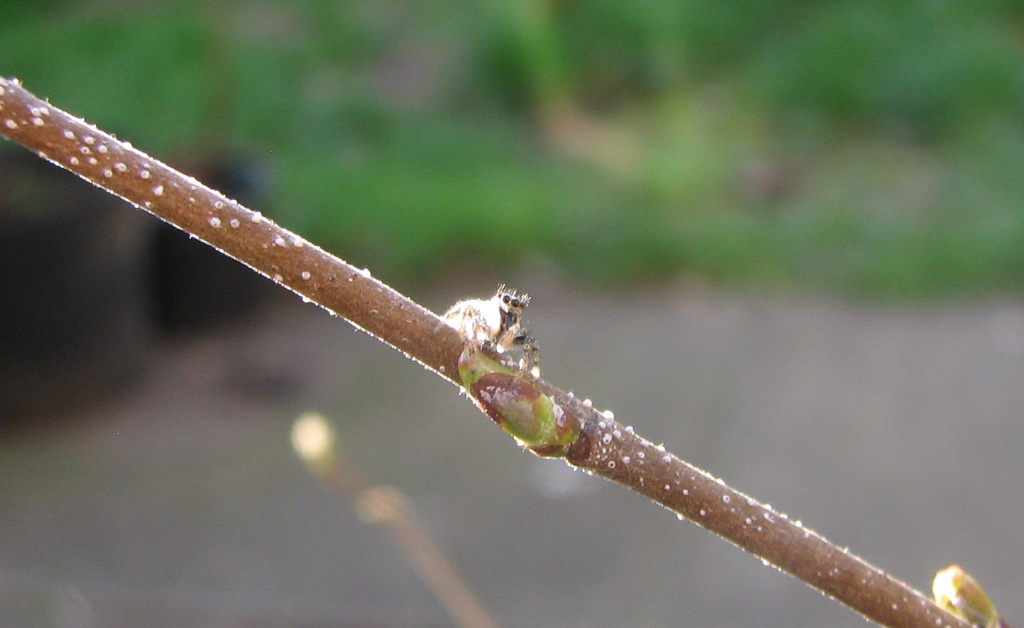
Here is two quick images of a Spider hiding under a leaf where he / she has made a little home for himself. Or herself. I don't know what type of Spider this is, but it looks like a variation of the common Garden Spider species. Or as I refer to them as, the one's with the shredded wheat legs! I love these spiders. They remind me of my childhood, as they were always around when playing and exploring outdoors.

spider-in-hideout-nest-leaf

Spider-Hiding-In Web-Under-a-Leaf Image

This one has different patterning to the "normal" Garden Spider, and has what resembles a kippah / yarmulke (Jewish cap) on the top of its body. Click the images for a closer look. I like most Spiders except Wolf Spiders. I really don't like them anywhere near me. Too fast and too hairy!

Strange Little Biting Bug UK (Picture)

I come in from being outside in the back garden after messing around with an Alder tree (getting in between the leaves to water it in the pot), and can instantly feel something biting my arm! I look and there's this tiny little yellow bug biting me. It couldn't be anything else other than this bug, as it was in the exact location where the stinging (biting) was coming from. I blew it off my arm and managed to catch it. The bug looks like some kind of hybrid green fly. It's mostly yellow in colour, with a red stripe starting at the eyes and going down the side of the body. It also has white and red Antennae (feelers).  If you look carefully you can see that it does have a mouth needle for piercing through humans skin. Like it did to mine. Strange little bug.

Strange Little Biting Bug UK

I would post the original picture of it caught in a glass but the insect is so small in comparison that its not really worth uploading. But take a look at it magnified approximately 6 - 8 times above. Click the image to enlarge. Weird little insect. Does anyone know what this is? Can you identify it? The bite has not left me with any lasting effects, so I don't think its particularly dangerous. But I'd still like to know if this is just some well-known insect that I've never seen before, or something more exotic and not native to the UK.

Update: This insect has been identified as the nymph of a Campyloneura Virgula. Thanks goes out to the very knowledegable AmandaB over at the nhm.ac.uk natureplus forum for quickly resolving the mystery.

Coprinus Mushroom Ink Cap Image

Here is an image of a Coprinus Mushroom (Ink Cap). If you look closely at this picture you will see that the mushroom is actually melting / dripping from the bottom of the head. Surprisingly, this mushroom is edible. However, you must take care not to drink any alcohol if you decide to eat this mushroom. Click the images for a closer look.

Coprinus Mushroom Ink Cap Image

Coprinus-Mushroom-top-birds-eye-view

IT IS POISONOUS if you eat it and drink an alcoholic drink at the same time. Or, I would imagine, even drinking alcohol on the same day as eating these mushrooms would be very dangerous. Don't do it!

Also, in case you were wondering, Ink Caps are not known to be hallucinogenic / psychedelic as far as I'm aware. Although some people have claimed that they felt a bit trippy after consuming large amounts of Coprinus Mushrooms, most people who know a lot about mushroom species dismiss this as just a placebo effect. But hey, who knows for sure. Check out this image on Flickr of a whole bunch of them rotting away.

Damson Plum Tree Images UK

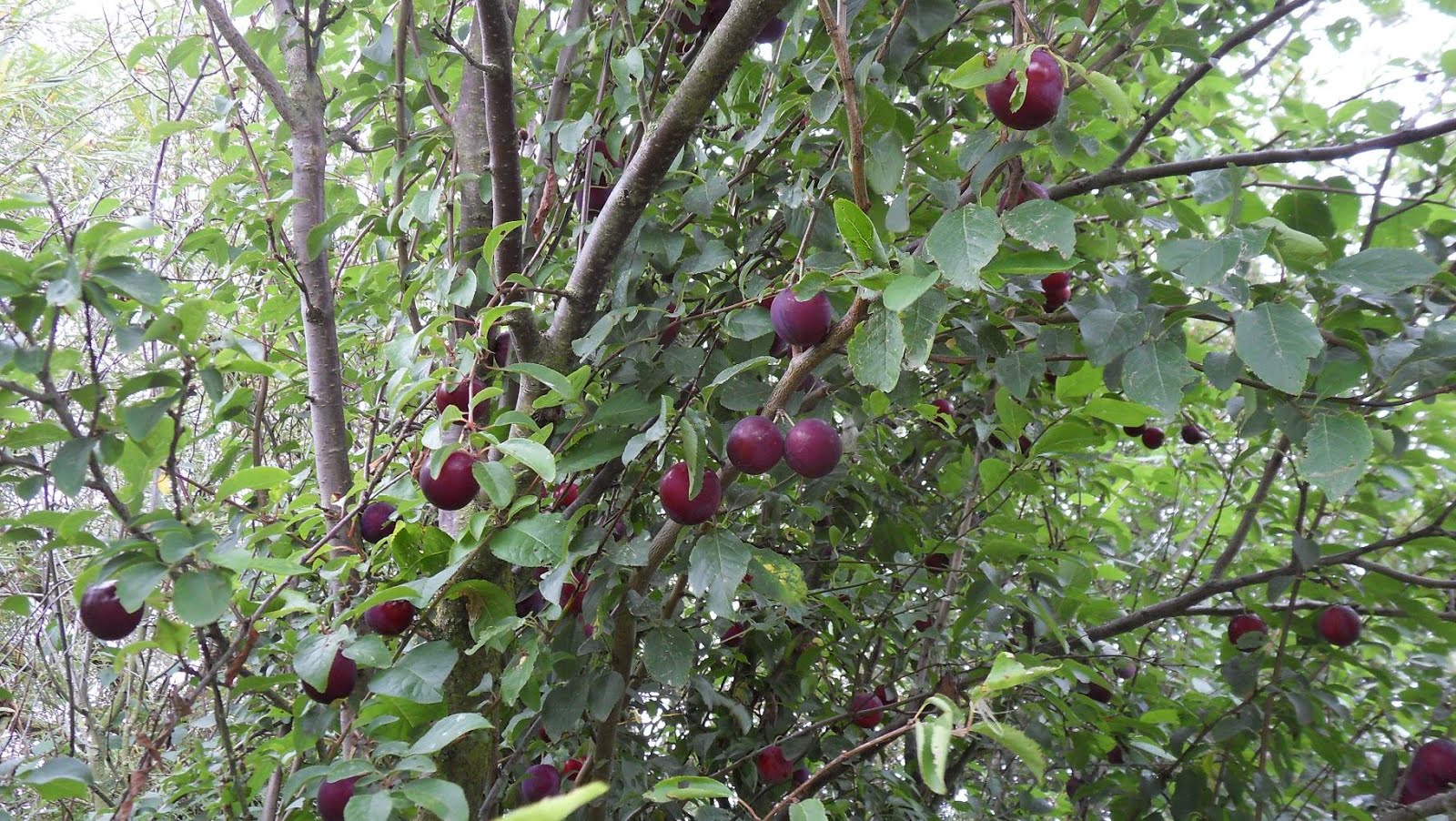
Here are some quick images of what I believe to be Damson Plum Tree's naturally growing in the wild. Pictures were taken in the UK. I believe there are different species of Damson fruits, some look a little different to each other. However, they are all part of the Plum family. If you came here looking for Identification of a berry / plum you have seen, but the images here don't look the same as what you seen, it could still be a Damson / Plum of some kind. If you want to buy a Damson tree, they are readily available for sale online on sites such as eBay UK. Click the images to enlarge.

Damson-Fruit-Tree-With-Leaves

Wild-Damson-Tree-Identification-UK

Damson-Tree-Fruits-Bark-Branches

Damsons-Growing-Wild

Small Damsons UK

I Found A Tree Full Of Plums

Been past this tree a few times in the autumn and winter and never really took much notice of it. The location is at the fringes of a landfill site in the UK. It wasn't until early summer that I was curious as to what it was. It was flowering, but I never thought it was a Plum tree. It's more like a big bush than an actual tree, so I thought it could possibly be a purple Damsel / Damson of some kind.


Then, a few weeks later I was at this same location and I see that this is in fact a Plum tree. I don't know what variety but there are big juicy Plums are all over the place. Perhaps you know the variety from the pictures.. If so let me know. Click the images for a closer look.

Elm Or Beech Tree Identification

Looking at Elm and Beech (UK and American Beech) tree leaf images online, it's clear to see that they are fairly difficult to tell apart. Either that or Google Images is throwing up the wrong pictures for the search terms I'm using.. So I'll post the pictures here and see if any experts come along and give me the correct answer.


I may ask on one of the Reddit sub reddits / categories as they are excellent resources for things like this. I took some pictures of a bird a few months back and didn't have a clue as to what species it was. I thought it was a Falcon of some kind. Turns out it was a Northern Goshawk.


Never used it to identify a tree before but I bet they have some very knowledgeable people in the tree sections. I'm sure they have tree / leaf I.D sub reddits (although I haven't checked yet) as they have one for everything else. I'll post this here first though. Does anyone know.. Elm, Beech, or something else? Click the images to enlarge and post a comment below.

Pine Cones In The Process Of Being Made

Have you ever wondered how Pine Cones are actually made. I hadn't really given it much thought until I was out and about not long ago collecting some Alder seeds. I noticed these "Brown things" on a Corsican Pine and thought, what the hell are they? Not knowing what they were, I thought they looked like a load of brown worms all cuddled together. After picking some off (Just a tiny bit) and breaking it apart, I then thought they were the seeds of the Pine tree!. As you probably guessed, I'm no Pine expert.


After some research, I discover that these brown things are Pine Cones being made / formed. To begin with they are really soft to the touch, but obviously the end result is a solid Pine Cone! Amazing. I think its fascinating the way that trees can muster the energy and generate the resources to make such things. From Pine Cones, to hard nut shells, and stones from fruits like the Plum and Peach. Hope you like the images of the young Pine cones. Click on the images to enlarge for a closer look.

Common Alder Tree | Alnus Glutinosa

Alder trees (Alnus Glutinosa), with their attractive foliage, have quickly become one of my favourites. I love trees that are tough (UK hardy), easy to grow, low maintenance and resilient. The Alder tree certainly ticks all these boxes. And the leaves are really nice too. Once you know what one looks like, they are easy trees to identify. There's just something about them that I like. Lately, I've been growing a lot of different trees from seed.


Scots Pine and Corsican Pines being two that stand out to me. I'm not sure if its my bad luck, but most of them have died. Even though I haven't done anything out of the ordinary. One day they seem in good health, and the next they are keeled over and in serious trouble. None of them have shown even a decent level of recuperation strength.

In my experience so far, when the Pines look unwell they never recover. They seem so sensitive that its not a tree that I will be growing from seed again anytime soon. I still have a few alive, but it has been quite a frustrating experience. Maybe next time I'll buy one or two that are already a few months old from eBay and see if I have better luck with those. I'm sure I will with some that are more established.


The Common Alders however (I think they are Common Alder) are all thriving. Some of them have taken a fair amount of abuse too at the hands of some squirrels. Dug up numerous times, covered with soil, left for dead, etc. But the Alders seem to just dust themselves off, and within a day or two they're as good as new again. I've got one in a see-through pot (a cut in half plastic water bottle) and I was amazed to see that some of the roots are actually purple.


Some of the leaves are also turning purple, and I believe that is down to the lower night temperatures. That could also be the case in regards to the roots but I'm not sure. Known as the Nitrogen fixer, and being able to tolerate growing in low nutrient soil, my Alder's are also potted in quite poor soil, yet they still look extremely healthy.


They are trees that love wet conditions, and are usually found near ponds, streams, lakes, etc. So as you can imagine, they are right at home near the water, and their roots can handle marsh-type conditions. Alders are even able to withstand totally waterlogged ground to a certain extent.


I will be posting more information about the Alder tree and uploading some more images to show people, who are unaware of what they are looking for when they are out and about, exactly what they look like. Actually, I didn't intend to put so many images in this post, so I think these pictures alone will allow for most people to be able to easily recognise this tree. Also on my list of trees and shrubs to collect some seeds from are: Rowan (Mountain Ash), Lilac (got them) and Silver Birch (got them).

Grey Willow Trees / Shrubs

Been going crazy lately collecting different types of seeds from trees and shrubs. Alder, Silver Birch and White Willow. Another one of those I've been collecting is the Grey Willow bush. Willow trees / shrubs are funny things. There are so many different types out there that it can be hard to positively identify a certain type. One of the main reasons for this is because they can make new hybrids from two different trees from the Willow species.


So, basically this means that two different types of Willow can mix together and make a new hybrid. This is great for the Willow family as a whole as it gives it a massive advantage in terms of spreading it's genes and ensuring that they are always continuing to evolve.

The Grey Willow is extremely easy to grow from seed. I have a few up and running at the moment. All you have to do is fill a pot with some soil, spread the seeds on the top, and then spray with water, making sure the surface remains moist. Put the pot in a location that gets some sunlight. A windowsill will do just fine. You could also put them under a low watt CFL "energy saver" bulb. After a while they will germinate.


Grey Willow seeds are super small, so its best to spread out the cotton ball-like material the seeds are protected / transported by and place it on top of the soil. You will be able to see the tiny seeds within the cotton ball-like material. They are little dots! Just remove as much of the white fur as you can and leave the rest. Makes things much easier and less fiddly. Works for me!

An Illuminous Coloured Spider UK

Luminous, Illuminous, call it what you like, but wow, take a look at this spider I spotted that was just chilling on the leaf of a Grey Willow tree. Sometimes I'll see an insect that looks really strange, and then find out that it's nothing out of the ordinary to those in the know, and very common in the UK. In this case I am not sure. But this certainly looks very strange. The picture doesn't do it justice. In the flesh it looked much more bright green / yellow in appearance. Almost glowing! If you look at the close up picture it even has a purple back abdomen (Spinnerets).


Bright colours are usually a warning sign on animals and insects, but in many cases they are also just for show, and the animal / insect is harmless. I wouldn't put my money on this spider being harmless though, as many of the fake widows have left some seriously bad injuries on the people they have bitten.


Some victims have been left scarred for life, and some have even had to have body parts amputated. One case that springs to mind is where a woman had to have some fingers removed. This subject is making me itch! Does anyone know what type of spider this is? If so post a comment below.

The Devil's Coach Horse Insect

I love most insects (and nature in general), especially anything Beetle-like. The Devil's Coach Horse (strange name) is quite similar to a Beetle, and is actually part of the Rove Beetle species (Ocypus olens). Although, it also shares a trait of the Scorpion in the way that it raises its tail when it feels threatened, as if it's going to attack / sting the enemy. I believe the tail contains a gas-like smelly acid substance that they squirt at their enemy.

The jaws that the Devil's Coach Horse possesses certainly look capable of delivering a nasty little bite to another insect. The jaw is big, intimidating, and could easily kill a lot of insects of the same size or bigger. I bet it would hurt getting bitten by those jaws. I wouldn't like to find out!


I'm no expert on this insect, and I don't know for sure if this is actually a Devil's Coach Horse as there are quite a few insects that look very similar. A few minutes later.. Just researched it and it is definitely a Devils Coach horse. Anyway, spotted this one just relaxing on a blade of grass. In auto mode my camera couldn't manage to focus properly, and I must have taken around 10 - 12 blurred images. It's usually really good at close up / macro shots when in auto mode, but this time it was being a pain in the aine.

Annoyed and about to give up, I changed the camera to manual settings and actually chose "Close-up". I managed to get just one decent shot (pictured above) before the Coach Horse decided to slowly wander into the many layers of long, trampled down grass and disappear! I guess it was meant to be. They are not uncommon however, and can be found in many locations throughout the UK.

Here Come The Indian Bean Trees

I planted a few of my Indian Bean Tree seeds last year in the hope of getting them planted outside within the summer of the same year. That did not happen. First off they were pretty slow growing and I didn't think they were big enough to survive the winter. And also, my space was taken up by the Paulownia Tomentosa mini plants that I planted outside, which all seem to have died due to the cold winter.

So now I'm going to replace the dead Tomentosa's with the two Indian Bean's that are starting to sprout leaves again!. They were just a twig in a pot, but now they have come back to life.


One of them looks like a mutant. It has three sets of leaves coming out the top. At the moment I am keeping the plants ticking over by leaving them on the windowsill and giving them the occasional blast under a small CFL bulb (23 Watt). They look good and I can't wait to get them planted outside so they can finally start to get established in the ground and turn into mini trees. Fingers crossed.

Trending

All Content / Images Copyright © Never Forget Nature
No image can be used without permission